
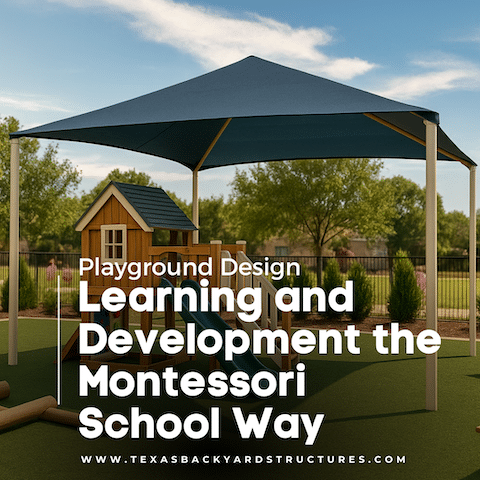
For decades, educators have understood that children learn best through doing — exploring, experimenting, and engaging with the world around them. No approach embodies that philosophy better than the Montessori school method, which emphasizes hands-on learning, independence, and creativity. Yet while Montessori classrooms are carefully designed for discovery, the same thoughtful design doesn’t always extend outdoors.
That’s beginning to change. Across Austin, Texas and beyond, schools and families are reimagining school playgroundsand backyard playsets as natural extensions of the learning environment — places where movement, imagination, and curiosity combine to build confidence and cognitive growth.
In this post, we’ll explore how Montessori principles are transforming modern playground design, what makes a play environment “educational,” and how parents, schools, and communities can create spaces that nurture both body and mind.
1. The Montessori Philosophy and Outdoor Learning
At its core, the Montessori approach encourages children to learn through active exploration. Dr. Maria Montessori observed that physical movement is essential to mental development — that the hand is the “instrument of the mind.”
Translating this philosophy outdoors means designing school playgrounds that invite open-ended play, self-direction, and sensory engagement. Instead of traditional fixed-route equipment, Montessori-inspired environments integrate features that encourage experimentation and problem-solving.
Key elements include:
-
Natural materials like wood, stone, and rope to engage the senses.
-
Scaled-down environments that empower independence.
-
Loose-part play zones that let children invent their own challenges.
-
Gardens, sandboxes, and water features to foster observation and cause-and-effect learning.
This approach doesn’t eliminate structure — it redefines it. Every feature on the playground becomes part of a larger developmental plan.
2. Why Outdoor Play is Critical for Development
Modern research confirms what Montessori educators have long known: outdoor play stimulates every domain of a child’s growth.
-
Cognitive: Climbing, balancing, and navigating space build problem-solving and planning skills.
-
Physical: Gross motor play strengthens coordination, balance, and endurance.
-
Emotional: Outdoor independence builds self-confidence and resilience.
-
Social: Unstructured play encourages negotiation, empathy, and teamwork.
In Austin’s active, outdoor-oriented culture, these benefits resonate with parents seeking to give their children a safe, enriching space to grow — whether at school or in their own backyard.

3. Designing Montessori-Inspired School Playgrounds
When designing commercial playgrounds for Montessori or early childhood settings, layout matters as much as the equipment. The goal is to create zones that reflect the Montessori classroom structure: independent, purposeful, and self-guided.
A. Multi-Sensory Exploration Zones
Play areas should encourage children to use all five senses. Incorporating wooden bridges, balance logs, tactile panels, and climbing structures promotes coordination while connecting movement with focus.
B. Nature-Based Elements
Integrating greenery, shade trees, and natural surfacing connects children with their environment. Many Austin-area Montessori schools now feature native plants, outdoor gardens, and shaded seating areas that double as outdoor classrooms.
C. Scaled Independence
Equipment should be appropriately scaled to age groups, allowing children to climb, reach, and experiment safely. Modular systems like vinyl or cedar playsets with multiple decks, slides, and rope climbers mirror this Montessori idea of accessible challenge.
D. Flow and Freedom
Unlike conventional playground layouts that cluster all activity into one space, Montessori-inspired playgrounds create natural boundaries — areas for physical exertion, creative expression, and quiet reflection.
This balance promotes choice and self-regulation, key tenets of Montessori learning.
4. The Role of Surfacing: Safety Meets Exploration
Playground surfacing may not be the most glamorous feature, but it’s one of the most critical. In both commercial school playgrounds and residential backyard playsets, the right surfacing protects children while supporting sensory engagement.
Common Montessori-Friendly Surfacing Options
-
ASTM-certified rubber mulch: Clean, low-maintenance, and available in natural colors.
-
Poured-in-place rubber: Seamless and accessible, ideal for preschool play areas.
-
Engineered wood fiber: Soft underfoot and naturally aesthetic.
-
Synthetic turf: Great for smaller Austin playgrounds where drainage and durability matter.
In Austin’s warm climate, these materials also help manage heat and water runoff — a bonus for schools conscious of sustainability and impervious cover regulations.
5. Bringing Montessori Principles Home: Backyard Playsets
Parents are increasingly seeking backyard playsets that reflect Montessori values — open-ended play, imaginative environments, and natural materials. For families in the Austin metro area, companies like Texas Backyard Structures have led this movement by offering customizable wood and vinyl playsets that mimic the creativity and structure of school playgrounds.
These playsets often include:
-
Multiple tower decks for vertical exploration.
-
Rock walls, rope bridges, and wave slides that encourage motor development.
-
Sandboxes and playhouses that spark imaginative and cooperative play.
-
Accessory panels (like chalkboards or lemonade stands) that blend play with learning.
Unlike store-bought plastic sets, these custom residential playsets can grow with the child, adding challenge and engagement year after year.
6. Community and Commercial Applications
The Montessori approach doesn’t end at the schoolyard gate. Many municipalities, churches, and HOAs across Central Texas are adopting Montessori-inspired layouts for commercial playgrounds.
This shift emphasizes multi-age accessibility, natural aesthetics, and flexibility in use. Playgrounds become not just recreational zones, but true community spaces that invite exploration, creativity, and social connection.
Commercial Playground Features That Reflect Montessori Principles
-
Multi-level climbing towers and open platforms.
-
Musical or sensory panels for creative interaction.
-
Picnic and seating areas that allow parents to engage.
-
Shade structures to promote safety and year-round use.
-
Inclusive ramps and ground surfacing for accessibility.
These spaces serve multiple purposes — active play, outdoor learning, and social gathering — aligning with both Montessori school philosophy and modern community design.
7. Austin, Texas: A Hub for Innovative Playground Design
Austin’s unique combination of family-centered neighborhoods, progressive education models, and outdoor culturemakes it an ideal environment for rethinking playgrounds.
Local schools like Montessori academies, charter schools, and private preschools increasingly prioritize natural materials, shaded designs, and sustainability. At the same time, homeowners are transforming backyards into micro-playgrounds with the same principles in mind.
This shared vision — between schools and families — creates a consistent developmental experience from the classroom to the home.
Why Austin Is Leading This Trend
-
Year-round outdoor play climate.
-
High concentration of Montessori and early education schools.
-
Strong interest in sustainability and craftsmanship.
-
Local access to quality builders like Texas Backyard Structures, who specialize in custom playsets, sheds, and outdoor structures built to Texas standards.
The result: a growing movement toward purposeful playground design that values beauty, durability, and developmental benefit.
8. Safety, Structure, and Sustainability
While creativity drives design, safety and sustainability remain non-negotiable. For Montessori environments, where freedom of movement is key, structural reliability is essential.
Texas Backyard Structures and similar builders approach safety holistically — from the engineering of playsets to the installation of certified playground surfacing and shade systems.
-
All materials meet or exceed ASTM and CPSC standards.
-
Vinyl and cedar builds resist splintering and fading.
-
Surfacing provides optimal fall protection.
-
Shade structures reduce surface temperatures by 15–20°F, extending playtime safely.
These details ensure play environments that are not only creative but also compliant with industry standards — an important consideration for schools, HOAs, and families alike.
9. Integrating Learning into Play: Montessori’s Lasting Lesson
Dr. Montessori’s core insight — that learning and play are inseparable — remains as relevant today as it was a century ago. Whether it’s a preschool in Bee Cave, a Montessori school in Round Rock, or a family backyard in Georgetown, the goal is the same: to give children freedom to explore in an environment designed for their success.
Modern school playgrounds and backyard playsets are the natural evolution of that philosophy. They’re no longer just “recess spaces,” but thoughtfully designed environments that stimulate independence, sensory awareness, and creativity.
When combined with the right materials, surfacing, and layout, these play environments can transform how children learn — every climb, balance, and laugh reinforcing lessons that last a lifetime.
10. Building the Future of Play in Austin
At Texas Backyard Structures, we believe every outdoor space has the potential to inspire. Our team has worked with schools, daycares, and homeowners across Austin to design playgrounds and playsets that balance safety, imagination, and durability.
Whether you’re planning a new commercial playground for a Montessori school or designing the perfect backyard playset for your family, we bring three decades of craftsmanship, creativity, and Texas know-how to every project.
Our process includes:
-
Consultation and site planning to understand your goals.
-
3D design previews of your layout and equipment.
-
Professional installation of playsets, surfacing, and shade structures.
-
Ongoing support and maintenance to keep your investment beautiful and safe.
By combining Montessori-inspired principles with high-quality materials and expert craftsmanship, we help create play environments where imagination and learning flourish side by side.
Conclusion: Where Play Meets Purpose
Transforming school playgrounds the Montessori way isn’t just an educational choice — it’s a community investment. Outdoor spaces designed with care become places where children thrive physically, emotionally, and intellectually.
From the classroom to the backyard, Austin families and educators are redefining what play means — making it safer, smarter, and more connected to nature.
If you’re ready to bring Montessori principles into your school or backyard, visit TexasBackyardStructures.com or stop by our outdoor showroom at 108 Benelli Dr, Hutto, Texas.
Let’s build spaces where learning, creativity, and play grow together — right here in Central Texas.
